1
Choose el, la, los, or las for singular and plural nouns.
Use Spanish definite articles for known people, things, and general ideas, then apply them to family and home scenes.
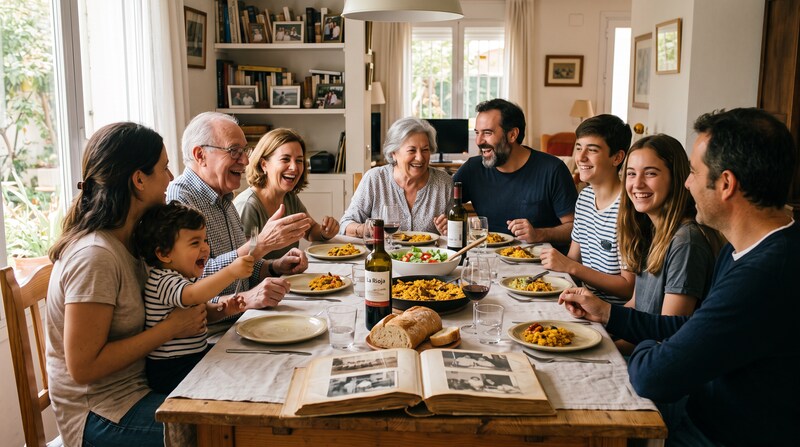
Video lesson
Follow the guided video first, then practise definite articles, family relationships, stressed-a nouns, al, and del below.
Open on YouTubeChoose el, la, los, or las for singular and plural nouns.
Use the definite article for known, unique, and general people or things.
Recognize feminine nouns that use el in the singular before stressed a or ha.
Use the contractions al and del accurately.
Apply definite articles to family relationships and objects at home.
Read and respond to a short family-lunch story in Spanish.
The definite article means the. Spanish changes it for gender and number, and uses it for people and things that are known, unique, or spoken about in general.
Spanish uses a definite article before a person or thing that is known, specific, or already clear in the conversation. The form changes with gender and number.
el padre
the father
la madre
the mother
los padres
the parents
las madres
the mothers
Use the article when the listener knows which person or thing you mean, when there is only one, and when you speak about a whole group or idea in general.
la madre de Sofía
Sofía's mother
la capital de Argentina
the capital of Argentina
el director
the director
Los libros ayudan mucho.
Books help a lot.
Some feminine singular nouns begin with a stressed a or ha. They use el in the singular for sound, but they are still feminine: el agua fría, el aula nueva.
el agua
the water
el aula
the classroom
el hacha
the axe
las aguas
the waters
Do not learn family words one by one. Connect each word to a relationship: the daughter of your aunt is your prima; the son of your brother is your sobrino.
La hija de mi tío es mi prima.
My uncle's daughter is my cousin.
El hijo de mi hermano es mi sobrino.
My brother's son is my nephew.
Los padres de mi marido son mis suegros.
My husband's parents are my parents-in-law.
The action is useful, but notice the article: Cierra la puerta means a particular door; Enciende la luz means the light we both know.
Cierra la puerta.
Close the door.
Enciende la luz.
Turn on the light.
Pásame las tijeras.
Pass me the scissors.
When a is followed by el, Spanish uses al. When de is followed by el, Spanish uses del. Do not use a el or de el as two separate words.
al jardín
to the garden
del jardín
of the garden
Voy al parque.
I am going to the park.
La puerta del aula.
The classroom door.
Singular
el
el padre · el libro
la
la madre · la puerta
Plural
los
los padres · los libros
las
las madres · las puertas
el
masculine singular
la
feminine singular
el padre · la madre
the father · the mother
los
masculine plural
las
feminine plural
los padres · las madres
the parents · the mothers
el agua
feminine singular
las aguas
feminine plural
El agua está fría.
The water is cold.
a + el
to + the
al
to the
Vamos al jardín.
We are going to the garden.
de + el
of + the
del
of the
La puerta del jardín.
The door of the garden.
Use the tree to connect each article to a real person: el abuelo, la tía, los padres, las primas. It turns the four forms into useful Spanish.
Interactive family tree
Read each relationship, then choose the correct person for the current question. The tree is also a word bank: tap the speaker button to hear every phrase.
0/6
correct
Grandparents
Their children and partners
Cousins, spouse, and in-laws
The actions are short context, not a new verb unit. Read the whole phrase and notice the known object: la mesa, las fotos, la caja, los vasos.
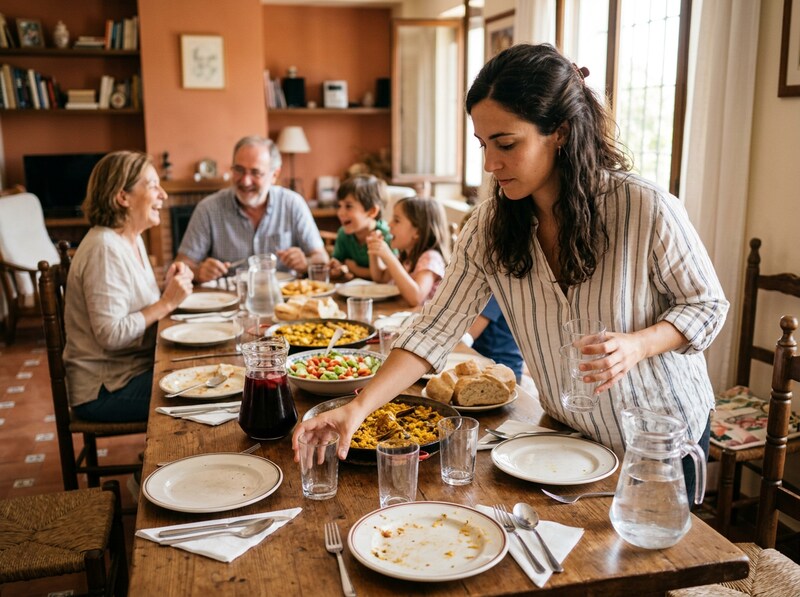
Pon los vasos en la mesa.
Put the glasses on the table.
Article context · los vasos · la mesa
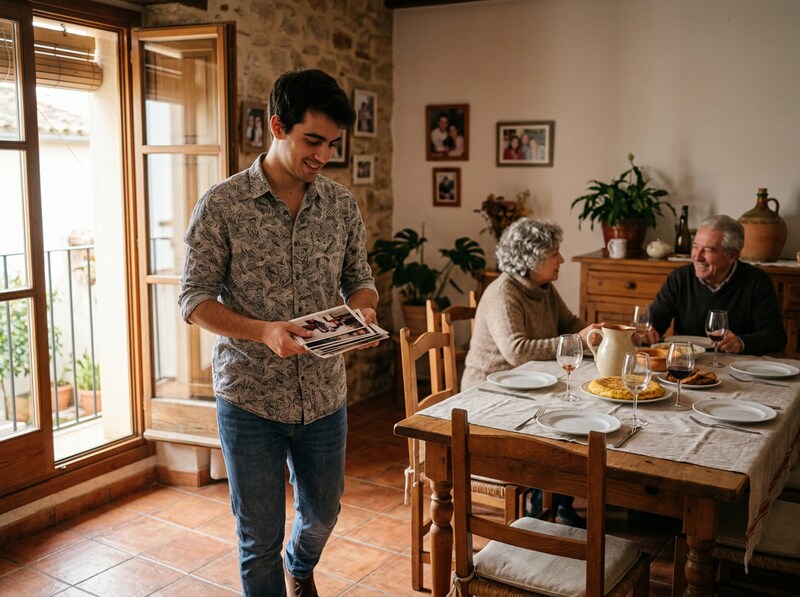
Trae las fotos, por favor.
Bring the photos, please.
Article context · las fotos
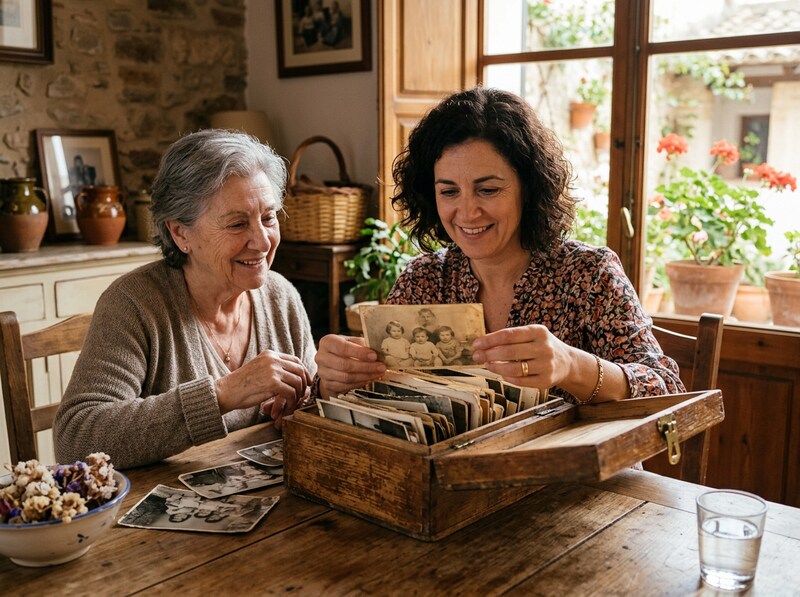
Abre la caja de recuerdos.
Open the memory box.
Article context · la caja de recuerdos
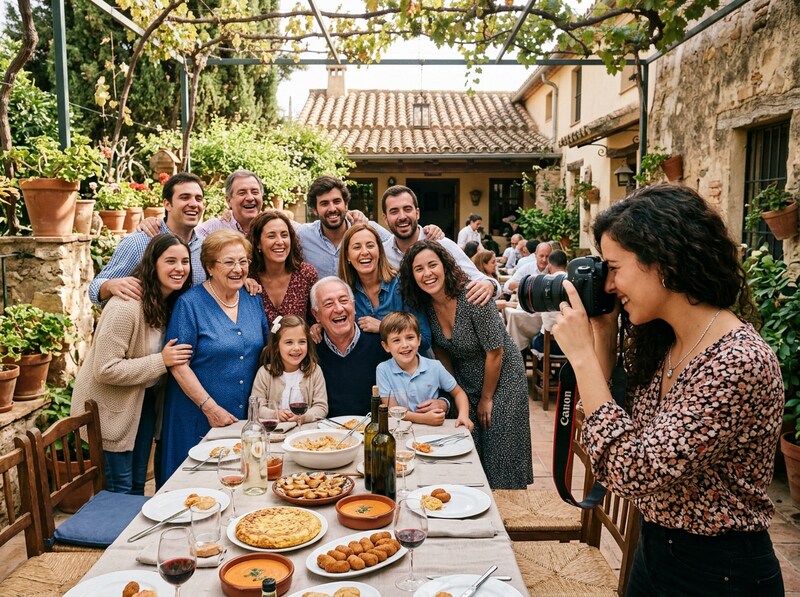
Haz una foto de todos.
Take a photo of everyone.
Article context · una foto de todos
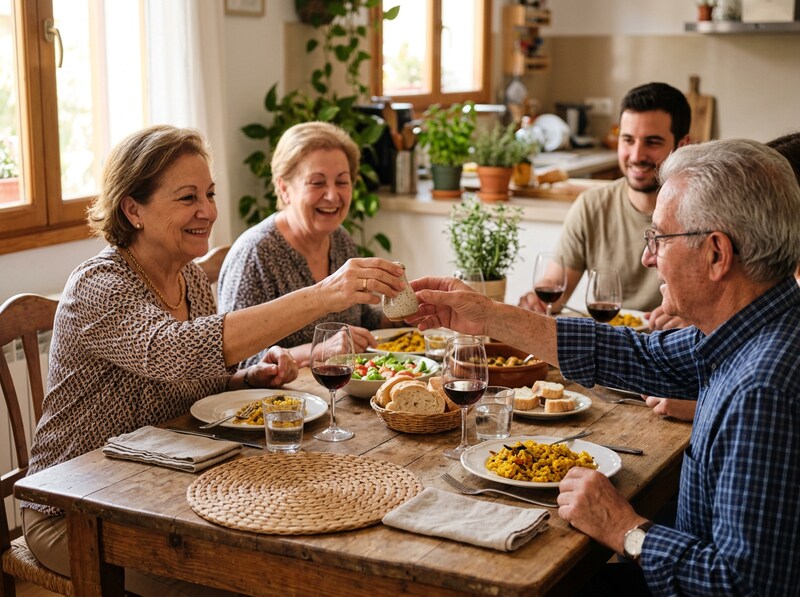
Pásame la sal.
Pass me the salt.
Article context · la sal
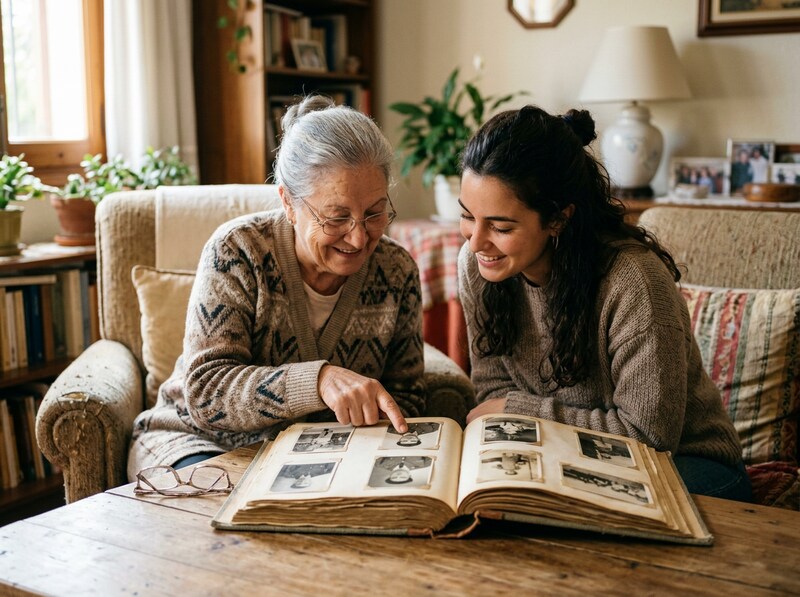
Dime quién es la mujer de la foto.
Tell me who the woman in the photo is.
Article context · la mujer · la foto
Keep the article attached to the noun. This grid is intentionally full: one visual family scene, then every phrase you will meet in the reading and practice.
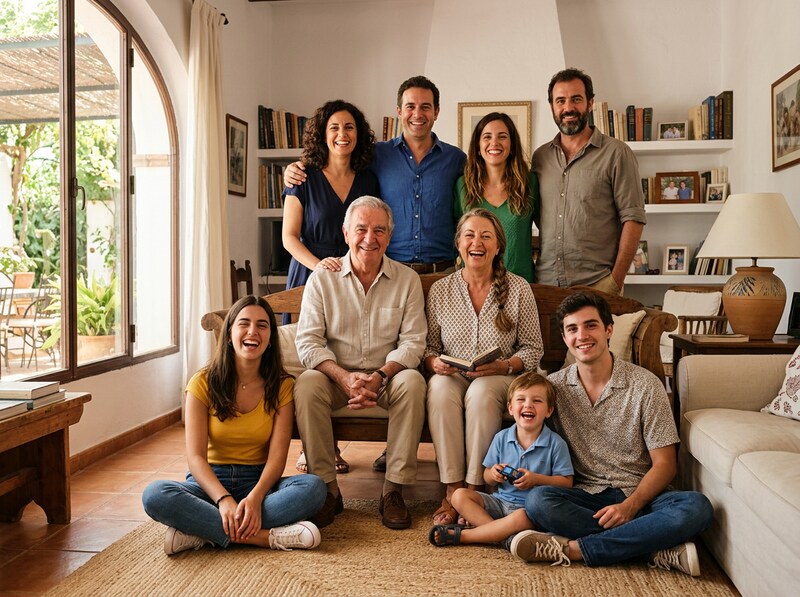
la familia
the family
article context
el abuelo
grandfather
family
la abuela
grandmother
family
los abuelos
grandparents
family plural
el padre
father
family
la madre
mother
family
los padres
parents
family plural
el hermano
brother
family
la hermana
sister
family
el tío
uncle
family
la tía
aunt
family
el primo
male cousin
family
la prima
female cousin
family
el sobrino
nephew
family
la sobrina
niece
family
el suegro
father-in-law
family
la suegra
mother-in-law
family
los suegros
parents-in-law
family plural
los vasos
drinking glasses
family home
las fotos
photos
family home
el álbum
album
family home
la caja de recuerdos
memory box
family home
la sal
salt
family home
la tarta
cake
family home
Read the story in two parts. Notice the article before each family word, object, and familiar place.
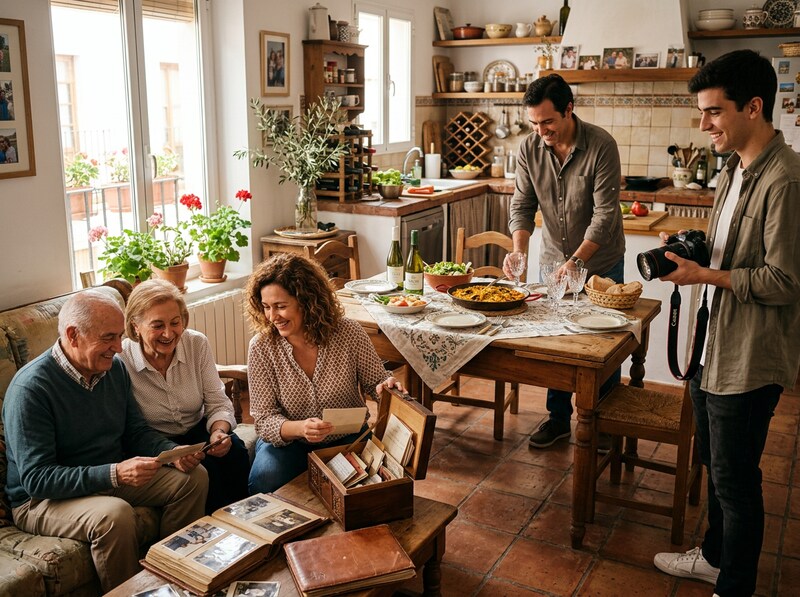
Sofía y su hermano Marcos visitan a sus abuelos, Elena y Ramón. Elena es la abuela de Sofía y Marcos; Ramón es su abuelo.
Sofía and her brother Marcos visit their grandparents, Elena and Ramón. Elena is Sofía and Marcos's grandmother; Ramón is their grandfather.
También llegan el tío Diego, la tía Clara y su hija Nora. Nora es la prima de Sofía. Su hermano pequeño Leo es también el primo de Sofía.
Their uncle Diego, aunt Clara, and their daughter Nora also arrive. Nora is Sofía's cousin. Her little brother Leo is also Sofía's cousin.
Nora llega con Iván, su marido. Marta y Julio son los padres de Iván: son los suegros de Nora.
Nora arrives with Iván, her husband. Marta and Julio are Iván's parents: they are Nora's parents-in-law.
Ramón busca el álbum antiguo y Sofía abre la caja de recuerdos. Marcos trae las fotos a la mesa.
Ramón looks for the old album and Sofía opens the memory box. Marcos brings the photos to the table.
Antes de comer, Sofía cierra la puerta del jardín y Marcos enciende la luz de la cocina.
Before they eat, Sofía closes the garden door and Marcos turns on the kitchen light.
Después, todos van al jardín. Sofía habla de la foto del abuelo y de las flores de la abuela.
Afterwards, everyone goes to the garden. Sofía talks about the grandfather's photo and the grandmother's flowers.
Elena trae la tarta. Sofía dice: “Pásame las tijeras, por favor.” Después escribe a la abuela: “Gracias por el domingo en familia.”
Elena brings the cake. Sofía says: Pass me the scissors, please. Then she writes to her grandmother: Thanks for the Sunday with family.
Definite-article phrases from the story
Practice begins with el, la, los, and las, then moves to meaning, al and del, family phrases, and image-based home contexts. The short commands are only there to make the article useful.
Interactive practice
This lesson behaves like a real app module: choose answers, get immediate feedback, hear Spanish phrases, and reset the whole round when you want another pass.
Exercise 1
Type only el, la, los, or las. Match gender and number.
___ casa
Type the complete Spanish answer.
___ médico
Type the complete Spanish answer.
___ naranjas
Type the complete Spanish answer.
___ coche
Type the complete Spanish answer.
___ habitación
Type the complete Spanish answer.
___ águila
Type the complete Spanish answer.
___ pantalones
Type the complete Spanish answer.
___ aula
Type the complete Spanish answer.
___ sillas
Type the complete Spanish answer.
___ lápices
Type the complete Spanish answer.
___ tijeras
Type the complete Spanish answer.
___ profesor
Type the complete Spanish answer.
___ perro
Type the complete Spanish answer.
___ hermana
Type the complete Spanish answer.
___ alumnos
Type the complete Spanish answer.
Exercise 2
Choose the sentence that talks about a known, unique, or general person or thing.
Sofía has one mother.
You mean the director of this school.
You are talking about oranges in general.
You are speaking about Chileans as a group.
The water here is cold.
The classrooms are new.
Exercise 3
Type only al or del. Remember: a + el = al; de + el = del.
Vamos ___ jardín.
Type the complete Spanish answer.
La puerta ___ jardín está abierta.
Type the complete Spanish answer.
El hijo ___ profesor está en clase.
Type the complete Spanish answer.
Voy ___ aula quince.
Type the complete Spanish answer.
El agua ___ vaso está fría.
Type the complete Spanish answer.
Vamos ___ parque después.
Type the complete Spanish answer.
Exercise 4
Type only el, la, los, or las. Each sentence names a family relationship.
Elena es ___ abuela de Sofía.
Type the complete Spanish answer.
Daniel es ___ sobrino de Laura.
Type the complete Spanish answer.
Ana es ___ sobrina de Laura.
Type the complete Spanish answer.
Nora es ___ prima de Sofía.
Type the complete Spanish answer.
Julio es ___ suegro de Nora.
Type the complete Spanish answer.
Marta es ___ suegra de Nora.
Type the complete Spanish answer.
Lucía y Mateo son ___ padres de Sofía.
Type the complete Spanish answer.
Elena y Ramón son ___ abuelos de Sofía.
Type the complete Spanish answer.
Exercise 5
Each picture gives the context. Type only the missing definite article.
Nora, pásame ___ sal, por favor.
Type the complete Spanish answer.
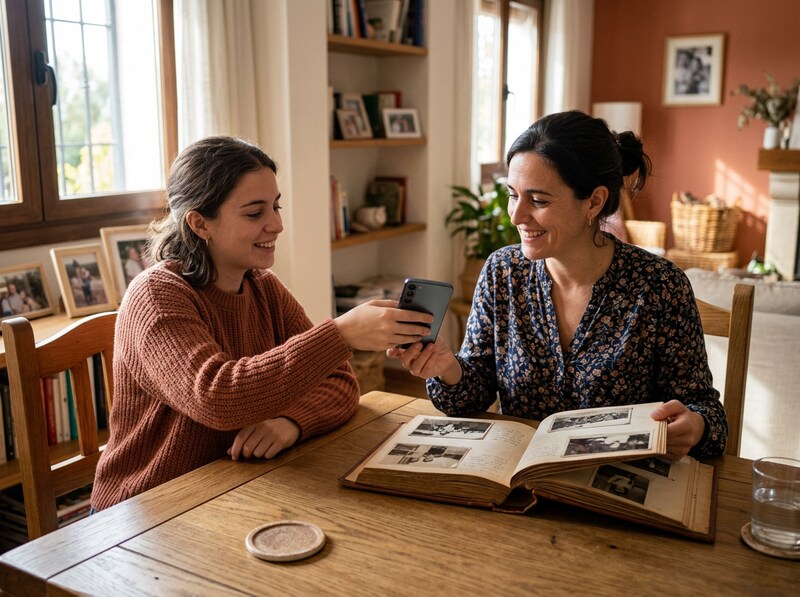
___ móvil es nuevo.
Type the complete Spanish answer.
___ niño de la foto es Leo.
Type the complete Spanish answer.
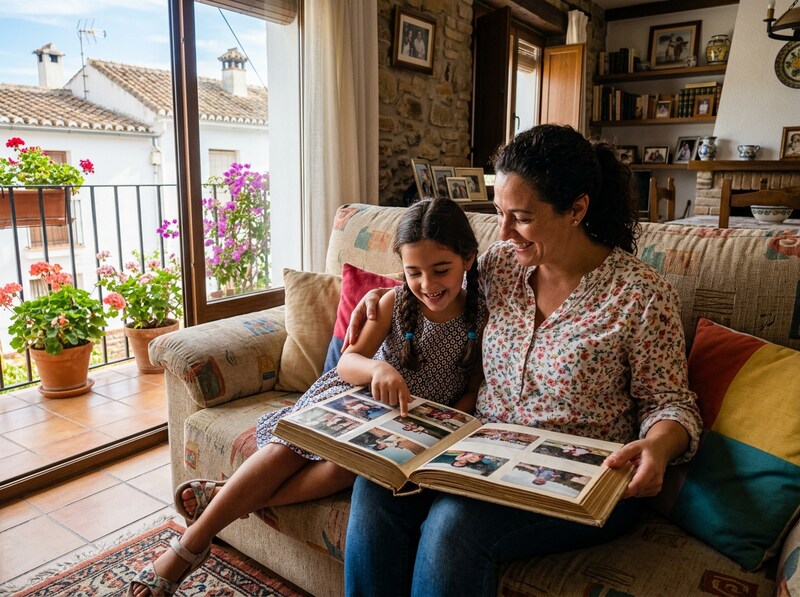
Ana es ___ sobrina de Laura.
Type the complete Spanish answer.
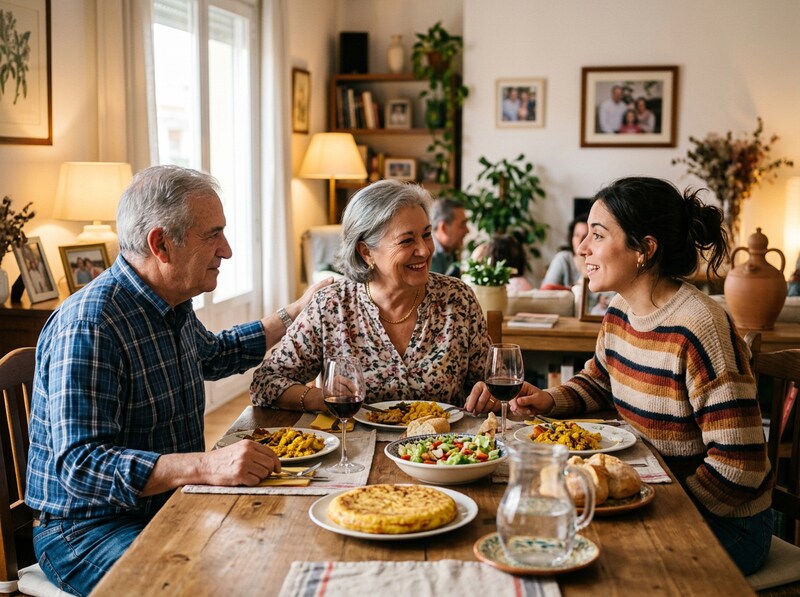
Marta y Julio son ___ suegros de Nora.
Type the complete Spanish answer.
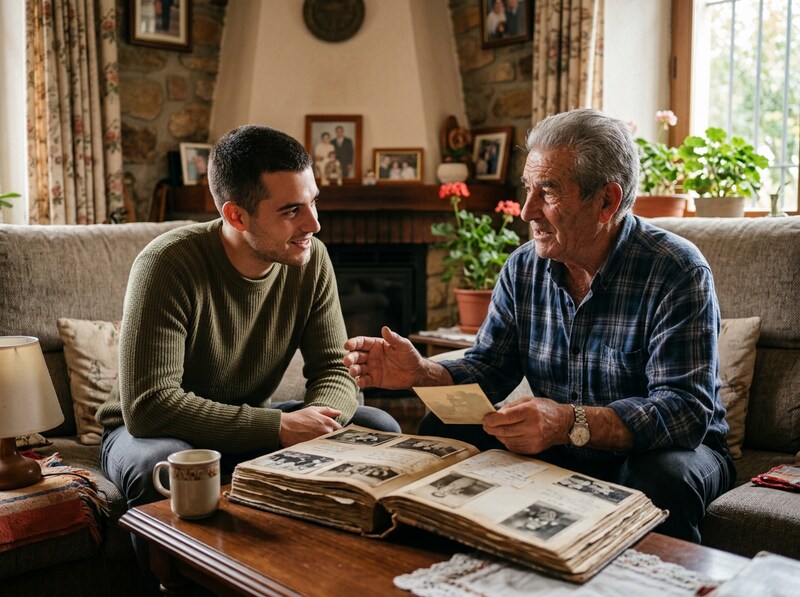
___ abuelo tiene una historia interesante.
Type the complete Spanish answer.
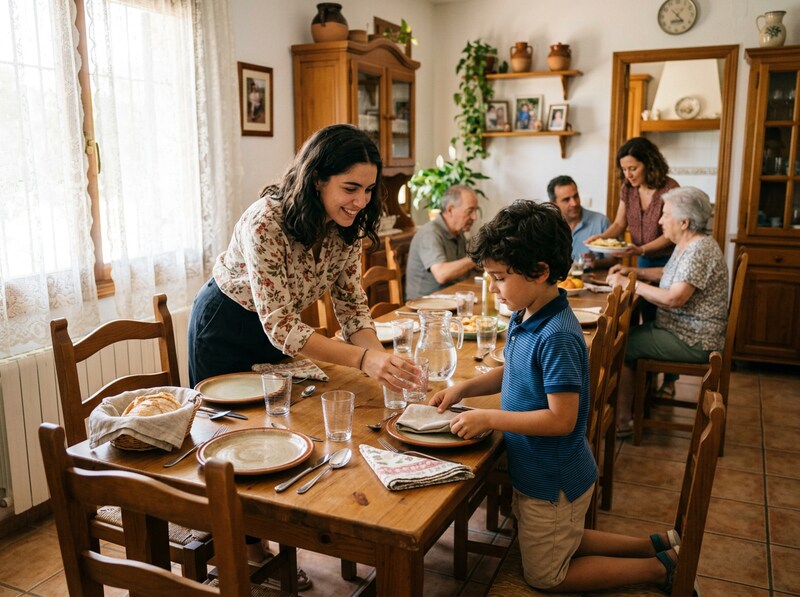
___ vasos están sobre la mesa.
Type the complete Spanish answer.
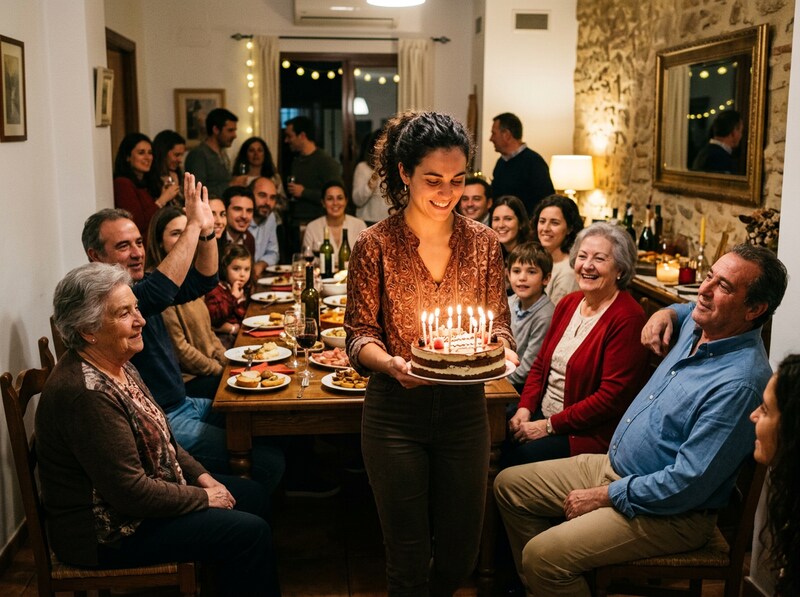
Ten cuidado con ___ tarta.
Type the complete Spanish answer.
Exercise 6
The action is only context. Choose the phrase with the correct definite article or contraction.
A known door in the room
The scissors on the table
The drinking glasses for this meal
You are going to the garden
The grandfather's photo
The water in the glass
Exercise 7
Use the story about Sofía's family. Choose the answer that matches the article phrase in the text.
Who are Elena and Ramón?
Who is Nora?
Whose parents-in-law are Marta and Julio?
What does Ramón look for?
Where does everyone go afterwards?
What does Sofía close?
Lesson result
The goal is not one lucky answer. The goal is fast recognition: article, gender pattern, noun phrase, then sound.
0
correct answers