1
Choose un, una, unos, or unas to introduce a new countable person or thing.
Articles and regular -ar verbs
Introduce something new, refer back to what is known, then use your first regular present-tense verbs at a Spanish market.
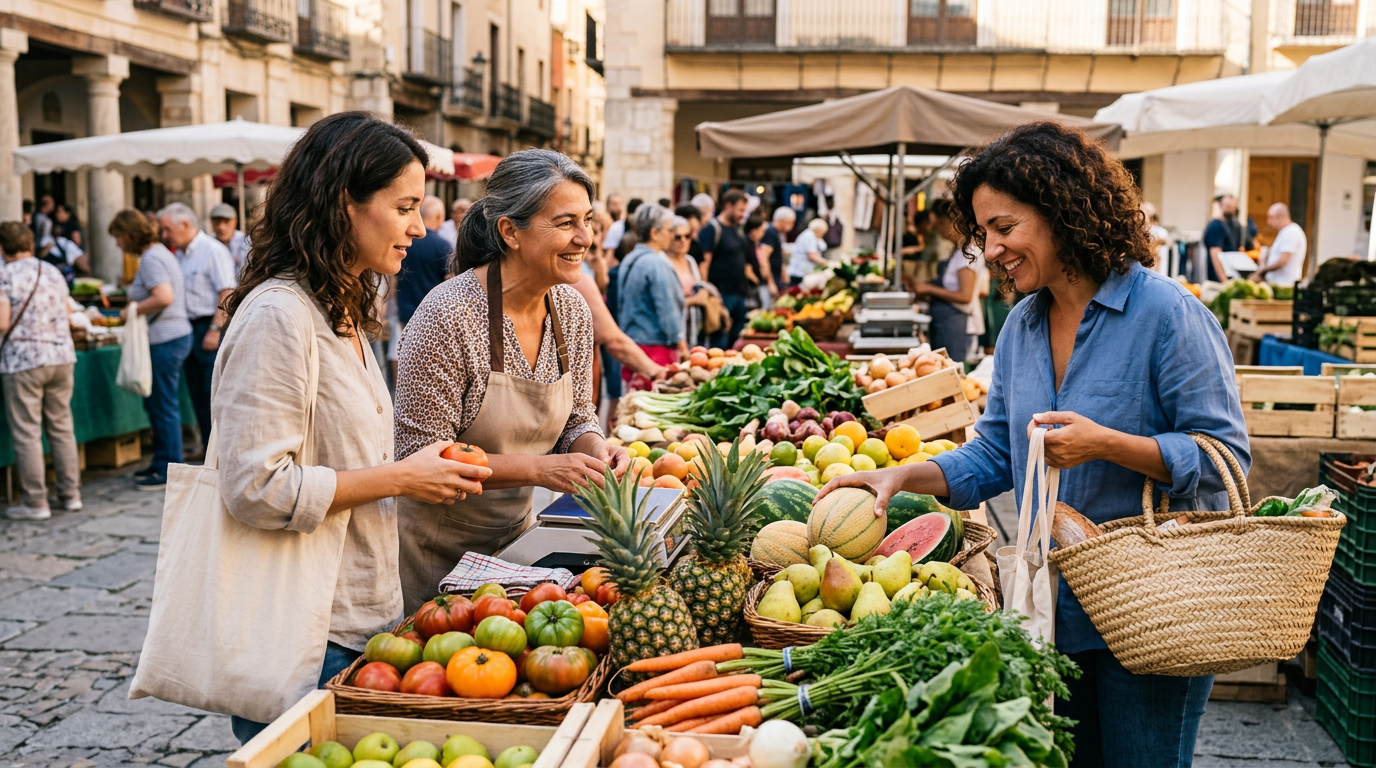
Un mercado. El mercado.
A market. The market.
Choose un, una, unos, or unas to introduce a new countable person or thing.
Choose el, la, los, or las for something known, specific, or general.
Use al and del in natural market sentences.
Form the regular present tense of -ar verbs with all pronoun rows.
Use market vocabulary in a short reading, dialogue, and interactive practice.
Video lesson
Watch the guided lesson first, then practise new and known nouns, al and del, market vocabulary, and the present tense below.
Open on YouTubeThe key is the conversation, not a word list. Un, una, unos, unas bring something new into the scene. El, la, los, las point to it once it is known, specific, or general.
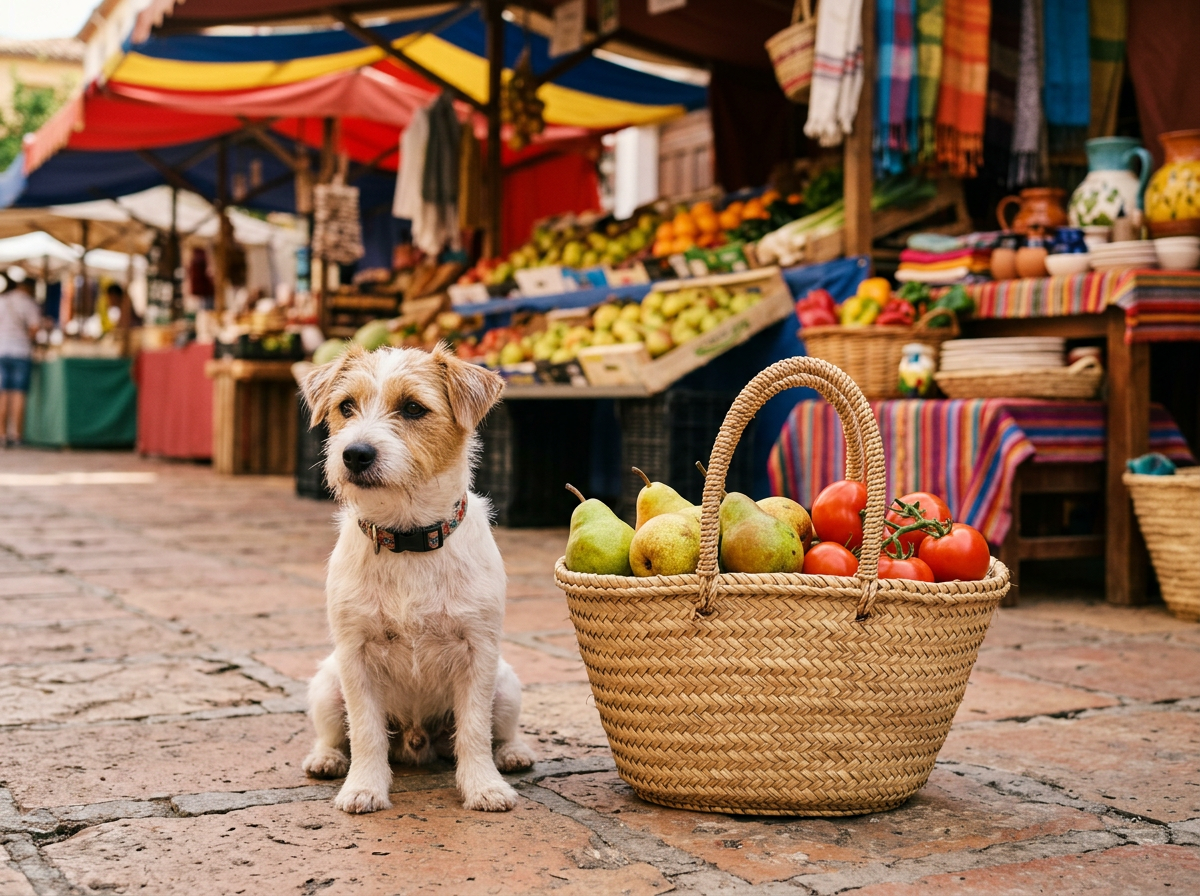
cesta
market scene
A new dog, then the dog
Un perro espera cerca de una cesta.
A dog waits near a basket.
El perro mira las frutas.
The dog looks at the fruit.
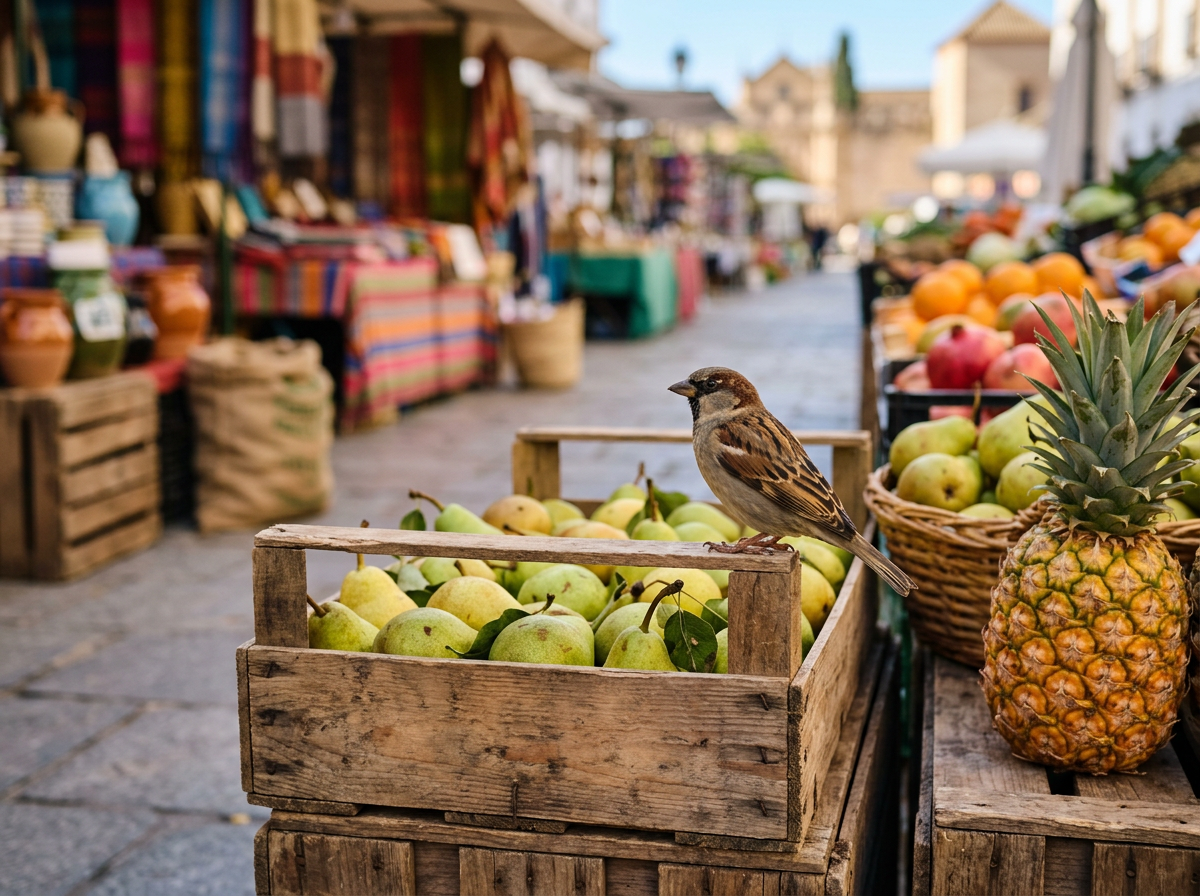
caja
market scene
A new bird, then the bird
Un pájaro está cerca de una caja.
A bird is near a crate.
El pájaro mira las peras.
The bird looks at the pears.
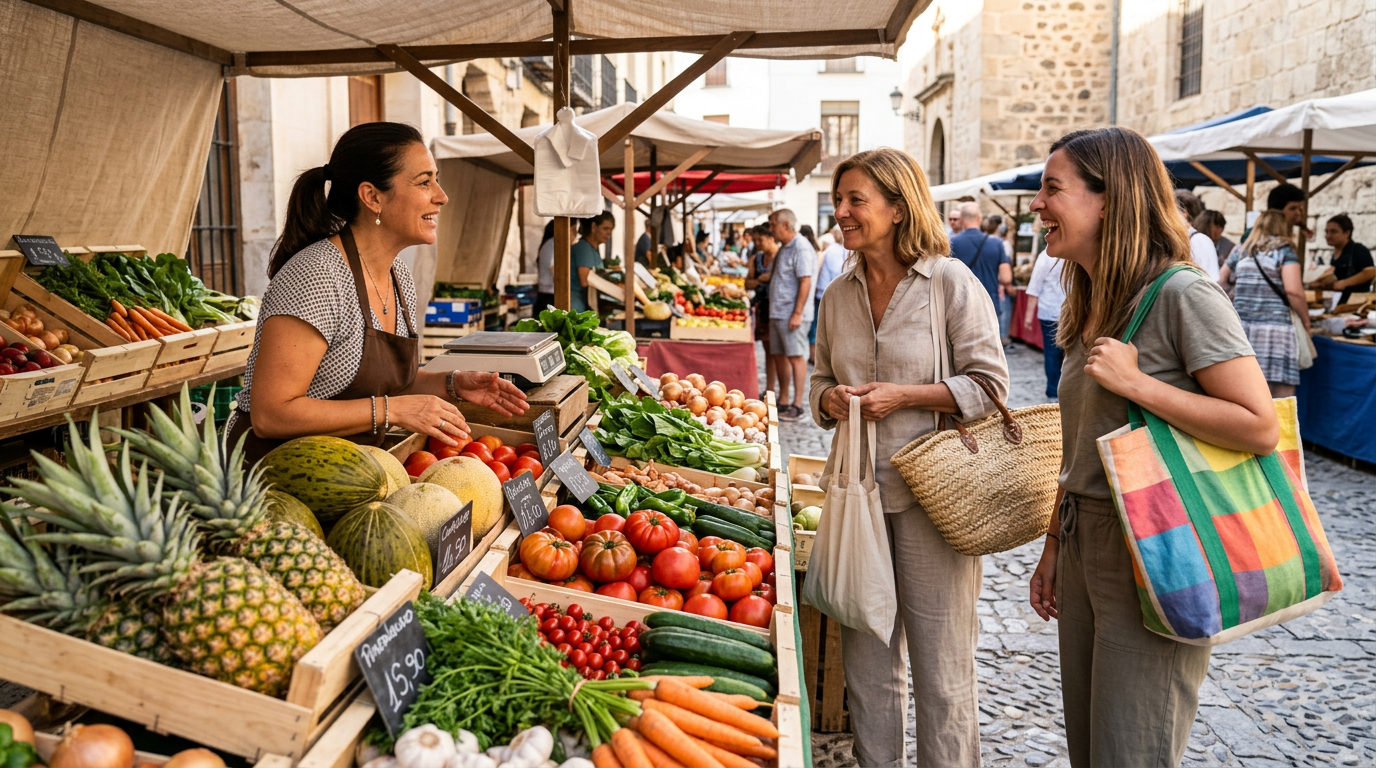
puesto
market scene
A new seller, then the seller
Una vendedora trabaja en un puesto.
A seller works at a stall.
La vendedora habla con la clienta.
The seller speaks with the customer.
Use un, una, unos, or unas when you introduce a person or thing for the first time. Use el, la, los, or las when both people now know which one you mean.
Una vendedora trabaja en un puesto.
A seller works at a stall.
La vendedora habla con la clienta.
The seller speaks with the customer.
Un perro espera cerca de una cesta.
A dog waits near a basket.
El perro mira las frutas.
The dog looks at the fruit.
Spanish often uses el, la, los, or las to talk about a whole category. It is not always one particular object in front of you.
Me gustan las fresas.
I like strawberries.
La lechuga es verde.
Lettuce is green.
Los tomates son rojos.
Tomatoes are red.
Use al for a + el and del for de + el. Learn them as single useful words.
Marta entra al mercado.
Marta enters the market.
El precio del melón es bueno.
The price of the melon is good.
Caminamos al puesto.
We walk to the stall.
La bolsa del vendedor es azul.
The seller's bag is blue.
A fast choice
Is this new here?
Use un, una, unos, unas.
Do we already know it, or mean the category?
Use el, la, los, las.
Me gustan las fresas.
I like strawberries. Here, las fresas means strawberries in general.
They are not optional spellings. Spanish contracts a + el into al, and de + el into del.
new singular
un / una
una piña
a pineapple
new plural
unos / unas
unas zanahorias
some carrots
known / general
el / la / los / las
las fresas
strawberries in general
to the
a + el = al
al mercado
to the market
of the
de + el = del
del melón
of the melon
Take off -ar and add the ending. The same present-tense pattern lets you talk about what people do at the market every day.
Remove -ar from the infinitive and add the present-tense ending. Hablar, trabajar, estudiar, comprar, and the other verbs in this lesson use the same pattern.
yo hablo
I speak
tú hablas
you speak
nosotros hablamos
we speak
vosotros habláis
you all speak
ellos hablan
they speak
yo
hablo
I speak
tú
hablas
you speak
él / ella / usted
habla
he / she / you (formal) speak
nosotros / nosotras
hablamos
we speak
vosotros / vosotras
habláis
you all speak
ellos / ellas / ustedes
hablan
they / you all speak
The ending path
yo
-o
tú
-as
él / ella
-a
nosotros
-amos
vosotros
-áis
ellos
-an
With hablar: hablo, hablas, habla, hablamos, habláis, hablan.
hablar
to speak
Regular -ar verb
trabajar
to work
Regular -ar verb
estudiar
to study
Regular -ar verb
llamar
to call / to be called
Regular -ar verb
mirar
to look at
Regular -ar verb
caminar
to walk
Regular -ar verb
usar
to use
Regular -ar verb
comprar
to buy
Regular -ar verb
entrar
to enter
Regular -ar verb
ayudar
to help
Regular -ar verb
Yo compro una piña.
I buy a pineapple.
Tú miras los precios.
You look at the prices.
Ella trabaja en el mercado.
She works at the market.
Nosotros caminamos al puesto.
We walk to the stall.
Vosotros estudiáis los verbos.
You all study the verbs.
Ellos ayudan con las bolsas.
They help with the bags.
These are new course words. Learn the article as part of every phrase: la piña, not only piña.
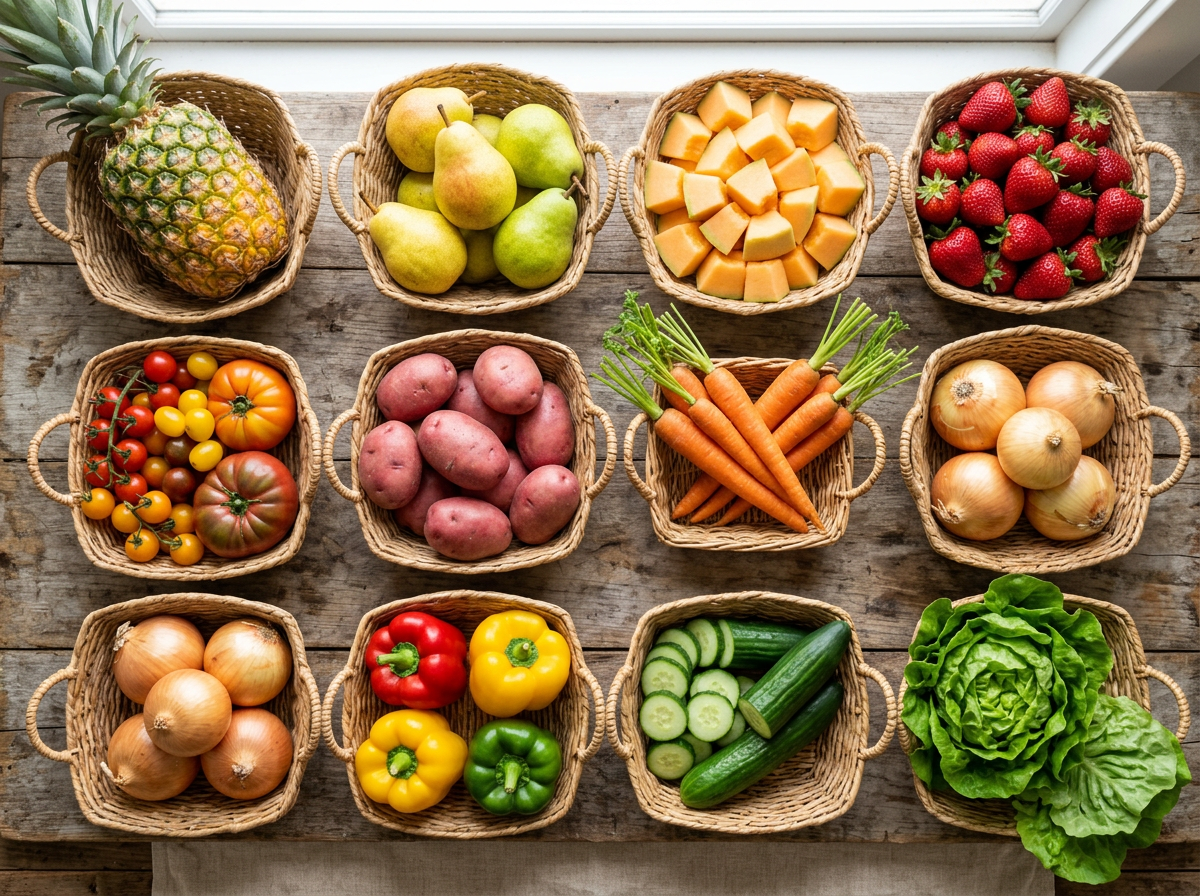
Read it in order. Watch the article change as each fruit, vegetable, and place becomes known.
Una mañana en el mercado
A morning at the market
Focus phrases
Laura trabaja en un puesto del mercado. Ella habla con los clientes. Cada mañana entra al mercado a las siete y usa las cestas.
Laura works at a market stall. She speaks with the customers. Every morning she enters the market at seven and uses the baskets.
Marta y Nico caminan al mercado. Marta compra una piña y unos melones. La piña está madura y los melones son grandes.
Marta and Nico walk to the market. Marta buys a pineapple and some melons. The pineapple is ripe and the melons are big.
Nico mira los precios. Él compra unos tomates, unas zanahorias y un pepino. La vendedora usa una bolsa grande para las verduras.
Nico looks at the prices. He buys some tomatoes, some carrots, and a cucumber. The seller uses a big bag for the vegetables.
Laura habla con Marta: “Un kilo de peras, ¿verdad?” Marta responde: “Sí, por favor. Nos gustan las peras.”
Laura speaks with Marta: A kilo of pears, right? Marta answers: Yes, please. We like pears.
Después, Marta llama a su hermana. “Nosotros compramos en el mercado. Vosotros estudiáis cerca, ¿verdad?” Su hermana responde: “Sí. Caminamos al puesto ahora y ayudamos con las bolsas.”
Afterwards, Marta calls her sister. We buy at the market. You all study nearby, right? Her sister answers: Yes. We walk to the stall now and help with the bags.
Start with three connected market texts. Then choose articles in 20 contexts, complete phrases, conjugate all of the regular -ar forms, and check the reading.
Exercise 1
Type each missing article or contraction. The feedback appears as soon as you answer.
Cloze text
Laura begins her day at the weekly market. Complete the text with an article or contraction.
Laura trabaja en ___ puesto del mercado. ___ puesto tiene fruta y verdura.
Cada mañana, ella entra ___ mercado a las siete. ___ cesta de Laura está llena.
Hoy prepara ___ piña, ___ melones y ___ tomates para sus clientes.
Cloze text
Marta and Nico arrive at the market. Notice what is new and what is already known.
Marta y Nico caminan ___ mercado. Marta compra ___ bolsa grande.
En ___ bolsa pone ___ zanahorias, ___ cebolla y ___ pepino.
Nico mira ___ precio ___ pimiento y compra dos.
Cloze text
This last text mixes general food preferences with particular things bought today.
A Marta le gustan ___ peras y ___ fresas. Hoy compra ___ kilo de peras.
Nico quiere ___ melón. ___ melón de la cesta es muy grande.
Después, ellos hablan con Laura y ayudan con ___ bolsas ___ puesto.
0/22 answers entered
Interactive practice
This lesson behaves like a real app module: choose answers, get immediate feedback, hear Spanish phrases, and reset the whole round when you want another pass.
Exercise 2
Read the situation. Choose the complete Spanish phrase that introduces a new item or refers to a known one.
You see a seller for the first time.
You now talk about the seller you just mentioned.
You want to buy one pineapple.
The seller shows you that pineapple.
You speak about strawberries in general.
You buy some peppers, not a known group.
Marta goes to the market.
You ask about the price of the melon.
The basket on the counter is full.
You need some bags at the market.
You speak about tomatoes as food in general.
You are looking at one known stall.
You ask for one cucumber.
The vendor gives you the cucumber you chose.
You buy some carrots.
You speak about lettuce as food in general.
You see some melons at a new stand.
You refer to those melons again.
A seller asks for the name of a new customer.
You identify Laura's workplace.
Exercise 3
Type the missing article or contraction only. Use the situation to decide whether the noun is new, known, or general.
Laura trabaja en ___ puesto de fruta.
Type the missing Spanish word only.
___ puesto abre a las ocho.
Type the missing Spanish word only.
Marta necesita ___ bolsa grande.
Type the missing Spanish word only.
___ bolsa está sobre la cesta.
Type the missing Spanish word only.
Nosotros entramos ___ mercado a las diez.
Type the missing Spanish word only.
El precio ___ tomate es bajo.
Type the missing Spanish word only.
A ellos les gustan ___ peras.
Type the missing Spanish word only.
Vosotros compráis ___ cebollas.
Type the missing Spanish word only.
___ pimientos de esta cesta son rojos.
Type the missing Spanish word only.
Yo compro ___ pepino pequeño.
Type the missing Spanish word only.
Exercise 4
Type the present-tense form. Keep the pronoun in mind and use the regular -ar ending.
Yo ___ con la vendedora. (hablar)
Type the missing Spanish word only.
Tú ___ en el mercado. (trabajar)
Type the missing Spanish word only.
Ella ___ español por la tarde. (estudiar)
Type the missing Spanish word only.
Nosotros ___ a Laura. (llamar)
Type the missing Spanish word only.
Vosotros ___ los precios. (mirar)
Type the missing Spanish word only.
Ellos ___ al mercado. (caminar)
Type the missing Spanish word only.
Usted ___ una bolsa azul. (usar)
Type the missing Spanish word only.
Yo ___ una piña. (comprar)
Type the missing Spanish word only.
Tú ___ al puesto de verduras. (entrar)
Type the missing Spanish word only.
Marta ___ a su madre. (ayudar)
Type the missing Spanish word only.
Nosotras ___ con el vendedor. (hablar)
Type the missing Spanish word only.
Vosotras ___ los sábados. (trabajar)
Type the missing Spanish word only.
Ellos ___ en casa. (estudiar)
Type the missing Spanish word only.
Yo me ___ Marta. (llamar)
Type the missing Spanish word only.
La niña ___ las fresas. (mirar)
Type the missing Spanish word only.
Nosotros ___ por el mercado. (caminar)
Type the missing Spanish word only.
Vosotros ___ la cesta. (usar)
Type the missing Spanish word only.
Ellas ___ unos tomates. (comprar)
Type the missing Spanish word only.
Nosotros ___ al mercado temprano. (entrar)
Type the missing Spanish word only.
Tú ___ al vendedor. (ayudar)
Type the missing Spanish word only.
Ustedes ___ con Laura. (hablar)
Type the missing Spanish word only.
Yo ___ cerca del mercado. (trabajar)
Type the missing Spanish word only.
Vosotros ___ los verbos. (estudiar)
Type the missing Spanish word only.
Nosotras ___ las peras. (comprar)
Type the missing Spanish word only.
Exercise 5
Choose the answer that matches the market text and its article or present-tense form.
Where does Laura work?
What does Marta ask for first?
Why does the text later say la piña?
Which subject matches compramos?
What does del mercado mean in the text?
What do Marta and Nico buy after the fruit?
Which form means you all look?
Which phrase speaks about pears in general?
Lesson result
The goal is not one lucky answer. The goal is fast recognition: article, gender pattern, noun phrase, then sound.
0
correct answers